
Which lamp will turn your closet into a jungle — and your plants into overachievers?
LEDs are rewriting indoor gardening. Modern chips give MORE light with LESS heat and smaller power bills. You get stronger growth without sweating the tent.
If you want bigger yields or just happier houseplants, the right fixture makes all the difference. You don’t need a PhD—just a solid light and a little patience, and your plants will thank you.
Top Picks




Spider Farmer SF4000 450W Full Spectrum
You get high-efficiency Samsung LM301H EVO diodes that deliver deep canopy penetration and excellent PPFD for larger tents. It balances power, dimming control, and reliability for serious hobbyists and small commercial grows.
Overview
The SF4000 is a heavy-duty LED designed for growers who need serious output in a 4x4 footprint. You’ll notice the Samsung LM301H EVO LEDs right away — they push efficiency and light quality, which translates to faster growth and better yields when you pair the light with good airflow and nutrition.
Key features and what they mean for you
These features mean you can run the light lower for veg or at higher output during bloom without swapping fixtures. The dimmer and app control help if you want to fine-tune intensity instead of constantly changing height.
Practical benefits and limitations
You’ll get reliable, consistent coverage across a 4x4 tent and strong penetration into middle and lower canopy layers. That makes this unit a great single-fixture solution for full-cycle grows, mothers, or larger autos. Expect a noticeable temperature output at 100% — pair it with an exhaust and oscillating fans to keep canopy temps stable.
Quick tips
If you want maximum ROI, use this light with a running schedule that ramps intensity through stages (veg -> transition -> bloom). For hobbyists upgrading from cheaper panels, you’ll appreciate the jump in light quality and how much easier it is to hit target PPFD without running the fixture at full blast.
Spider Farmer SF2000 200W Dimmable Grow Light
You get Samsung LM301H EVO efficiency in a compact 200W package that suits 2x4 tents and veg areas. It’s easy to hang, dim, and dial in for seedlings through bloom without being power-hungry.
Overview
The SF2000 is a scaled-down sibling of the SF4000, tuned for smaller tents and hobbyists who want high-quality light without oversized power draw. You’ll find it particularly handy for seed starting, veg racks, or a single 2x4/2x3 tent.
Key features and why they matter
The combination of compact size and high-efficiency chips lets you run lower electricity bills while still delivering good PPFD to your plants. Dimming saves you from constantly adjusting fixture height during early stages.
Practical use and trade-offs
For everyday growers, this fixture gives a lot of bang for the buck — it’s stable, reliable, and versatile. If you plan to scale to a full 4x4 canopy or multiple heavy bloom cycles, you’ll eventually want larger fixtures or multiple units. Also, proper ventilation is still important since the unit produces some heat at full output.
Quick tips
Start seedlings at lower dimmer settings and increase output gradually when transitioning to bloom. Pair with reflective tent walls and a simple oscillating fan for even, healthy canopy development.
MARS HYDRO TS3000 420W Commercial Grow Light
You’ll get a high-output option with a patented reflective hood and a diode layout aimed at commercial-style coverage. It’s a strong choice if you want to run a single fixture over a mid-sized canopy with reliable results.
Overview
The TS3000 scales up Mars Hydro’s reflector technology for larger tents, offering a solid compromise between power and price for 4x4–5x5 footprints. If you need strong single-fixture coverage without the boutique price tag, this one is worth a look.
Feature highlights
These traits let you manage large canopies without deploying dozens of small fixtures. The reflector helps push light laterally as well as down, improving uniformity when hung at recommended heights.
Practical notes
Expect a bit more weight and some assembly time compared to slim bar lights. The reflector material is efficient but not military-grade — check for shipping dings. Also, ensure good tent ventilation because the fixture produces meaningful heat when run high.
Quick tips
Hang at manufacturer-recommended heights and use incremental dimming as plants transition. If you notice heat stress, increase airflow or drop the dimmer slightly rather than raising the fixture too high.
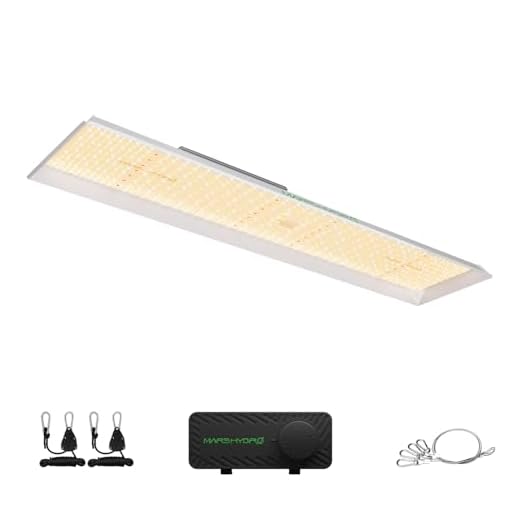
MARS HYDRO TSL2000 300W Uniform Coverage Light
You’ll appreciate the diode layout that targets center-to-side uniformity, which yields a more even PPFD map across your space. It’s a solid mid-range choice if you want consistent results in a 4x2 to 5x3 footprint.
Overview
The TSL2000 targets growers who want even light distribution without huge expense. By arranging diodes more densely in the center and more sparsely on the sides, the unit reduces hot spots and helps you get an even canopy across 4x2 to 5x3 spaces.
Why the layout matters
This means you’ll likely need fewer fixtures to cover the same area compared with older layouts that concentrate light in the middle. The improved evenness helps reduce stretching and promotes uniform budset across the canopy.
Practical considerations
The light is a dependable performer for hobby growers and small commercial setups, but it won’t match the elite efficiency of the highest-end Samsung-LM-based fixtures. Installation is straightforward, but pay attention to hang height and orientation to maximize coverage.
Quick tips
Run the light at lower dimmer settings for seedlings and increase intensity in stages. If you plan multiple fixtures, daisy-chain wiring simplifies power management and keeps your canopy consistent.
VIPARSPECTRA P4000 400W Commercial LED
You’ll get a high-output fixture that’s efficient for a full 5x3 footprint and includes a dimmer for stage tuning. It’s a practical, mid-range commercial lamp suitable for hobbyists scaling up or small grow rooms.
Overview
The P4000 is geared at growers who need strong coverage without stepping into boutique pricing. With 400W-class performance and a dimmer, it’s aimed at 5x3 tents and comparable greenhouses where you want a single reliable fixture to cover a canopy.
Notable features
This model is a pragmatic compromise: more powerful than hobbyist lights but more affordable than some flagship fixtures. You’ll see good results when hung at recommended heights and when combined with proper airflow.
Practical advice
Expect to pair this with at least moderate ventilation; it produces heat at higher dimmer settings. If you want maximum efficiency or the deepest penetration, premium fixtures still have the edge, but this one is excellent for mid-size setups.
Quick tips
Position the light according to canopy response rather than fixed numbers — if you see stretch, lower the light; if you see bleaching, raise or dim. Daisy-chaining power runs can simplify wiring when using multiple units.
MARS HYDRO TS1000 150W Reflector Light
You get a patented highly-reflective hood that boosts light utilization and helps create a uniform footprint in tight spaces. It’s a reliable, affordable fixture that suits beginners and hobbyists running 2x2 to 3x3 tents.
Overview
The TS1000 is a popular entry-level fixture from Mars Hydro that uses a reflective hood to improve light spread and intensity. It’s a practical pick if you want an affordable light that still gives you dimmable control and decent coverage for small tents.
Standout features
For you, that means better PPFD across the canopy without buying a larger fixture. The dimmer is useful for preventing stretch in seedlings and for dialing in intensity as plants mature.
Practical tips and caveats
The reflector’s thin metal construction can show cosmetic damage in transit, so inspect on arrival. The instructions are basic, but the hardware is straightforward to orient and hang. Expect strong light — keep the unit a safe distance from very young seedlings initially.
Quick tips
Use the mid-range dimmer settings for veg and bump up gradually during transition to bloom. If you notice hot spots, raise the fixture slightly or add side lighting for a more even canopy.
SF600 72W Sunlike Full Spectrum Light
You’ll find this unit to be an efficient, low-heat option for seedlings, clones, and small racks. It’s a budget-friendly way to upgrade from T5s and gives noticeably faster, healthier starts.
Overview
The SF600 is a compact, energy-saving LED aimed at growers who need good quality light for a 2x4 footprint without the noise or heat of bigger fixtures. If you’re coming from fluorescent T5s, this will feel like a step up in both intensity and plant response.
What you get and why it helps
That combination means faster germination, stronger stems, and deeper green coloration compared with cheap fluorescents. It’s a practical choice for hobbyists running racks of starts or a small single-tent setup.
Limitations and practical advice
Because it’s designed for small footprints, you’ll need multiple units or a larger fixture for full 4x4 flowering. Placement is important — keep the light roughly 8–12 inches above seedlings and use a timer to maintain consistent photoperiods.
Quick tips
Use a power strip with a timer for hands-off operation and stagger multiple SF600s across shelves to even out coverage. Many users pair this light with a low-cost daisy-chained timer to automate schedules.
VIPARSPECTRA P1000 Compact Dimmable LED
You’ll get a no-frills, well-built fixture that gives surprisingly good results for the price. It’s a solid starter light with dimming stages and included accessories that make setup painless.
Overview
The P1000 is a compact, practical LED that’s attractive for newcomers and budget-conscious growers. You’ll appreciate the simple dimmer knob and the included hanging kit — it’s designed to get you up and running quickly.
What it does well
For your small grow or houseplant setup, the P1000 delivers reliable light without complicated controllers or an app. It’s a straightforward, workmanlike fixture that focuses on function over flash.
Trade-offs and tips
If you plan to scale to larger flowering areas you’ll eventually need higher-output fixtures. Also, while build quality is good, the P1000 lacks advanced control features like wireless scheduling or high-end drivers.
Quick tips
Start with lower dimmer settings for seedlings and bump intensity as plants mature. If you want to expand later, matching additional P1000s keeps coverage even and predictable.
Phlizon 600W SMD Dual-Switch Grow Light
You’ll get a bright, inexpensive SMD fixture that works well for seed starting and supplemental light. It’s an accessible upgrade from basic LEDs or fluorescents, but you should expect basic controls and occasional reliability trade-offs.
Overview
Phlizon’s 600W SMD unit is aimed squarely at growers who want an inexpensive, full-spectrum fixture with veg/bloom switching. You’ll find it bright and practical for winter plant care, starters, or as supplemental lighting in a larger setup.
Features that matter for your grow
The light gives immediate visual improvements over basic purple LEDs or old fluorescents — plants green up faster and roots tend to establish quicker. Where it shines is in accessibility: price, simplicity, and usable output.
Practical cautions and usage tips
A few users reported failures after many months; Phlizon’s warranty and replacement responsiveness helped in those cases. The included hanging hardware and short cord may require you to add longer, heavier-duty accessories to hang the fixture safely in tents.
Quick tips
Use a heavy-duty extension with surge protection and a strong carabiner for hanging. Keep a replacement plan in mind if you rely on it for critical mother plants, and consider rotating units for redundancy.
VIPARSPECTRA V1200 Veg/Bloom Dual Switch
You’ll get a dual-switch design that simplifies veg vs. bloom settings, giving a full-spectrum output that many growers find effective across cycles. It’s a high-coverage fixture at a mid-range price, though the advertised wattage can be misleading.
Overview
The V1200 targets growers who want simplified spectrum control via veg and bloom switches. It’s built to cover a large footprint and often replaces multiple smaller fixtures in a hobby or small commercial environment.
What to expect
This means you can run veg-only or full-spectrum bloom modes with a quick toggle, simplifying daily operations. Users frequently note that the light’s real-world draw (~500–520W on some units) is lower than the model number implies.
Practical considerations
Because the fixture produces heat and strong light, start with higher hang heights and gradually bring it down while monitoring for stress. Packaging quality has varied in some reports, so inspect on arrival and test immediately.
Quick tips
Hang higher initially (30"+ depending on strain) and lower gradually as plants adapt. Use a reliable power meter to know actual draw and plan circuits accordingly.
Final Thoughts
If you run a serious tent or a small commercial setup and want the highest efficiency and canopy penetration, pick the Spider Farmer SF4000 450W Full Spectrum. Strengths: Samsung LM301H EVO diodes, excellent PPFD for deep canopies, reliable dimming and controls. Ideal use: 4x4 (or up to 5x5) flower tents and growers who need one powerful fixture to cover a full canopy. Hang for bloom at roughly 18–24 inches and use dimming to tune intensity.
If you grow in a smaller space or want a compact, energy-smart option for seedlings through bloom, choose the Spider Farmer SF2000 200W Dimmable Grow Light. Strengths: high-efficiency Samsung diodes in a compact footprint, low power draw, easy to hang and dial in. Ideal use: 2x4 tents, veg racks, and seed-starting areas. Hang 12–24 inches and reduce power for seedlings or raise for flowering.
Both picks give you industry-leading diode tech and dimming control—SF4000 for maximum canopy coverage and punch; SF2000 when you want efficiency, simplicity, and excellent results in smaller spaces.


Loved the bit about the TS1000 being great for seedlings — that’s exactly what I need for my tiny 2×2 setup 😊
One quick question: does the daisy-chain work well if you have multiple small tents? I’m worried about accidentally tripping a circuit when I chain three lights together.
I chained two TS1000s on one circuit fine, but when I added a third it tripped the breaker — lesson learned. Separate them next time.
Daisy-chaining is convenient but calculate total amp draw before chaining too many fixtures. Spread them across circuits if needed and avoid overloading a single outlet. Also, check the cord ratings and connectors for safety.
Anyone had longevity issues with the Phlizon 600W? It looks tempting price-wise but I keep seeing mixed comments about reliability. If it lasts 2-3 grow cycles I’m probably fine, but I don’t want a light that dies mid-flower.
Phlizon is a budget brand — some users get years of service, others report failures. If you go that route, consider keeping a backup fixture for critical bloom stages or pair it with a more reliable light for redundancy.
I had mine for 18 months and it was fine, but I treat budget units as ‘replaceable’ rather than long-term investments.
Quick question about mixing systems — I’m thinking of using an SF2000 up top and adding a TS1000 as side/supplemental light to even out a 3×3 tent.
Pros/cons I can think of:
– Pro: Better penetration + fill at sides
– Pro: Use the TS1000 for seedlings while SF2000 runs bloom cycle
– Con: Different spectra could confuse light cycles??
Anyone tried mixing Spider Farmer and Mars Hydro together? Would love practical tips on hang heights and schedules.
TIA!
Also watch for uneven spectrum claims — most full-spectrum fixtures are fine together. If you have a PAR meter, map the canopy after setup and tweak heights/dimming.
I did SF2000 + TS1000. I set the TS1000 on a timer with the same photoperiod and kept it ~18–20″ above canopy while SF2000 was 12–14″. Worked well for me.
Mixing brands is fine — plants respond to photon flux and spectrum, not brand. Keep light schedules uniform (same photoperiod) and stagger heights so they don’t create hot spots. Use SF2000 as your primary and the TS1000 lowered for side fill. Dim the TS1000 if it overpowers the edges.
Just upgraded my 4×4 tent to the Spider Farmer SF4000 after reading this — what a beast. Lights are bright but the heat is manageable compared to my old HID setup. Anyone else noticed better bud density with the LM301H EVO diodes? Also curious what height you’re running it at during bloom?
I run mine at 14″ during late veg and drop to 12″ for mid-bloom. Temps stayed stable for me with good tent ventilation. 👍
Glad it worked out, Sam — the LM301H EVO diodes do improve canopy penetration which often shows up as tighter buds. For bloom most people run the SF4000 around 12–18 inches depending on intensity and plant response. Use a PAR meter if you have one to dial it in.
I measured marginally better yields vs my old light, but I also upgraded exhaust at the same time — hard to isolate 100% to the SF4000.
Big thanks for including budget picks — I started with the VIPARSPECTRA P1000 and the difference from old CFLs was wild. A few notes from my experience:
1) P1000 is great for seedlings and small veg racks.
2) If you plan to scale to a 5×3 or bigger, the P4000 makes more sense.
3) Watch the actual draw vs advertised watts — don’t freak out, just compare specs and reviews.
Also, anyone else annoyed by marketing watt claims? 🤨
P1000 served me well for two cycles. If you upgrade, keep your dimmer settings saved — makes transitions easy.
Preach on the watt claims 😂. I look at PAR maps and actual watt draw now instead of the ‘W’ headline.
Marketing watts are mostly for store shelves. Real-world performance = PPFD, spectrum, and build quality.
Totally — advertised wattage often refers to equivalent or peak LED claims. Always check the actual power draw and diode type (Samsung LM301H vs generic SMD) for apples-to-apples comparisons.
And remember to check warranty/support reputation with budget brands — it can matter if something fails mid-cycle.
VIPARSPECTRA 1200W with veg/bloom switches sounds like a channel-surfing dream. But why do they insist on calling it 1200W when actual power is 520W? Is that marketing theater or am I missing a math class? 😂
Anyway, for someone covering a broad canopy, is the dual-switch actually useful or just gimmicky?
I use the veg switch for clones and early veg — saves power and reduces stretch. Then flip bloom mid-cycle. Not a gimmick imo.
That ‘1200W’ label is marketing — often based on equivalent incandescent/HPS equivalence or theoretical max. The dual-switch is genuinely useful: veg switch cuts red and focuses blue/green, bloom adds full spectrum red for flowering. It’s a practical feature for stage-specific light recipes.
If you want to be precise, focus on PPFD and spectrum graphs rather than the big watt number.
Marketing watts = store-shelf drama. The switches do help when you want to reduce energy in veg or punch the reds in bloom.
Great roundup. I’m trying to decide between the Spider Farmer SF2000 and the SF600 for a small 2×2 cabinet. SF2000 seems like overkill but SF600 might struggle later on. Any advice for someone growing both seedlings and a small flower run?
If you plan to flower in that footprint, the SF2000 is the safer bet — it gives more headroom for bloom PPFD. The SF600 is excellent for seedlings and clones but might require you to put lights closer during flower which can cause hotspots. If budget’s tight, SF600 + extra light later could work.
Also consider daisy-chaining and dimming needs — SF2000 has better dimming range for transition stages.
I had an SF600 and added a cheap UFO for bloom — fine for one plant but not ideal. Save for the SF2000 if you can.
If you like efficiency and less heat, SF2000 is nicer in the long run. SF600 is a great starter though.
I’ve been eyeing the MARS HYDRO TS3000 for a 5×5 area.
The article praises the reflective hood and coverage, but I’m wondering:
– Is it better to run one TS3000 or two TSL2000s for canopy uniformity?
– How important is the daisy-chain feature for commercial runs?
I run about 12 plants, mostly bushes, not tall sativas.
I ran two TSL2000s over a 5×5 and liked the even spread better. Less light loss at the edges.
Good questions. For a 5×5 canopy the TS3000 can do the job as a single fixture, but two TSL2000s give better center-to-side uniformity. Daisy-chaining helps with cable clutter and simplifies power control when scaling up, but plan your electrical load and breakers accordingly.