
Which LED will make your plants actually *thrive* — and not roast your electric bill?
Your plants just sent a group text — they want better light. You keep rotating the pot and hoping for the best. That old bulb? It’s doing more guessing than growing.
Full-spectrum LEDs give the right light without the oven-like heat. They save energy, boost canopy penetration, and simplify your setup. Scan these picks to match a light to your tent size and growing goals.
Top Picks


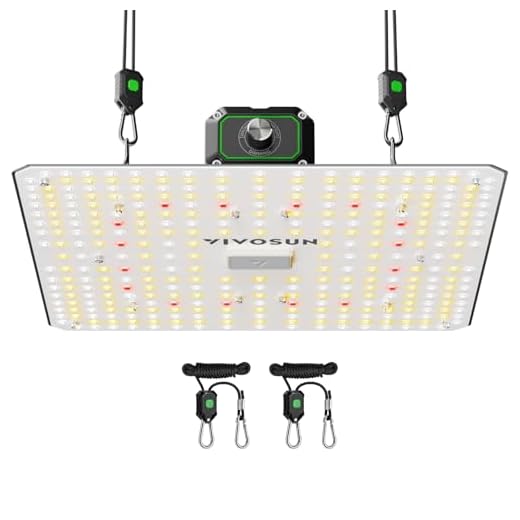

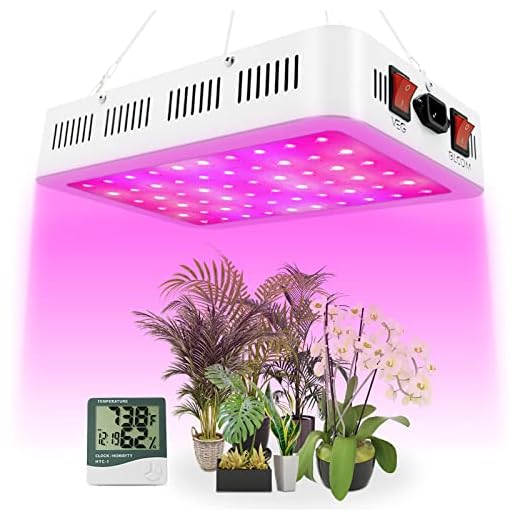
Spider Farmer SF2000 Samsung LM301H Fixture
You get premium LM301H diodes and strong overall PAR performance that’s well-suited for 2x4 to 3x3 setups. It runs cool, dims smoothly, and offers excellent bang for buck compared with higher-priced horticultural LEDs.
Why growers like it
This model packs Samsung LM301H EVO LEDs, which are known for very efficient light output and excellent color balance. If you want a single light that will carry seedlings through veg and into significant flowering in a 2x4 or 3x3 tent, this is one of the best mid‑range options.
Standout specs and practical impact
You’ll notice strong, even coverage and less hotspotting than many cheaper fixtures. The dimmer is handy for adjusting PPFD without physically moving the light — a real convenience if you’re working alone or have fixed hang points.
Real-world tips and trade-offs
If you want professional-level LEDs without the extreme premium of boutique brands, this offers a very competitive mix of performance, efficiency and reliability.
MARS HYDRO TS3000 Commercial 420W Panel
You’ll get strong, uniform output with an upgraded reflector and a diode layout designed for wide coverage — ideal for 4x4 to 5x5 setups. It’s meant for growers who need consistent, high-output performance at a reasonable price compared with top-tier commercial fixtures.
Built for bigger tents and serious hobbyists
The TS3000 is aimed at growers who need a high-output fixture with even coverage across larger footprints. The combination of a reflective hood and dense diode placement results in strong PPFD values without huge inefficiencies.
Specs that translate to results
You’ll see powerful, even light distribution that supports heavier canopy loads and larger plants. Because the unit is larger and draws more power, it’s most appropriate if you have dedicated ventilation and a sturdy hanging system.
Practical notes for set up and operation
For anyone upgrading from small fixtures or moving into semi-commercial growth, this panel is a practical way to increase canopy capacity without stepping up to very expensive professional fixtures.
MARS HYDRO TS1000 Reflector LED Panel
You’ll benefit from a patented white reflector that boosts usable light and improves uniformity across the canopy. It’s quiet, dimmable across multiple levels, and a reliable pick for small to medium grow tents.
What makes the TS1000 different
The TS1000 stands out for its reflective hood design that increases the effective light hitting your plants. That design concentrates and spreads light better than many flat-bar fixtures, meaning more usable PAR where your canopy needs it.
Useful features in real grows
In practice you’ll get very even coverage in a 2x2 or small 3x3 tent and be able to place the unit closer to plants without excessive heat. The fixture is also energy efficient and delivers strong lumen figures for its wattage.
Tips and expected trade-offs
If you value even coverage and a quiet, efficient setup, this is one of the most practical choices in the sub‑200W class.
VIPARSPECTRA P2000 250W Dimmable Panel
You’ll benefit from an upgraded diode layout and reliable thermal design that delivers uniform PAR across a 3x3 or 4x2 footprint. It’s a solid mid-range option if you want a single fixture to carry plants from veg to bloom.
Who should consider the P2000
This panel is a sensible step up if you want a single light that can reliably handle a 3x3 or 4x2 tent through full cycles. It blends good diode layout with approachable pricing and practical user features like dimming.
Notable features and real-world effects
In practice you’ll get even flowering and less hotspotting than many basic panels. The heat management is effective enough that you can run the light at fairly aggressive intensities if your ventilation supports it.
Setup tips and trade-offs
If you want a reliable, fairly powerful fixture that simplifies lifecycle growing without a massive price tag, this is one of the best mid-range choices you'll encounter.
VIPARSPECTRA P700 Compact Grow Panel
You’ll appreciate the small footprint and 4-stage dimming that makes this panel very versatile for houseplants and seed starts. The build is lightweight and the output is impressive for its size, making it a handy supplement or primary light for tiny tents.
Good for small spaces and starters
This P700 is aimed at growers who need a compact, affordable panel for a 2x2 tent, plant shelves, or windowless rooms. It’s particularly well-suited to seedlings, clones and single small plants where space and heat management matter.
Features that matter in everyday use
You’ll find it easy to hang and adjust, and the low heat profile means you can keep it closer to plants than old HID systems. Many users pair several of these for even coverage on larger benches.
Practical advice and limitations
The P700 balances affordability with useful features; it’s not a top-end commercial fixture, but as a versatile, easy-to-use light it’s a dependable choice for compact grows.
Kingled KP2000 Full-Spectrum 200W Light
You’ll find solid performance for veg and flower at an approachable price point, with respectable PAR values for small tents. Fans and build quality are generally fine, and it comes with enough accessories to get started quickly.
Practical, budget-oriented performance
This fixture aims to give hobbyists a trustworthy LED with decent PAR output that won’t break the bank. It’s a common pick for growers who want to add a dependable secondary light or outfit a small tent on a budget.
What you’ll appreciate in regular use
You’ll see vigorous growth compared with basic fluorescent or CFL setups, and many users report good longevity if they keep it ventilated. The KP2000 delivers predictable results when used at proper distances for seedlings through flower.
Tips and realistic expectations
For everyday growers wanting decent coverage without premium pricing, this fixture is a defensible, practical choice.
Phlizon Upgraded 600W Dual-Switch LED
You get a bright full‑spectrum lamp with separate veg and bloom switches and a track record of good customer support. It’s a versatile mid-range option that’s easy to use in hobby setups, though cord length and hanging hardware may need upgrades.
Why it’s popular with hobby growers
Phlizon’s 600W-style fixtures are built to deliver strong full-spectrum output while keeping costs reasonable. The dual-switch layout makes it easy to toggle between veg and bloom spectrums, which most hobbyists find convenient for cycling plants.
Practical features and usage notes
You’ll notice fast vegetative responses and healthy leaf color when the fixture is properly hung and ventilated. Several users praise quick warranty support when issues arise, which is comforting if you’re buying on a budget.
Setup tips and expectations
For most hobby applications this strikes a reasonable balance between performance and affordability, but if you need commercial-grade longevity consider premium-brand alternatives.
VIVOSUN VS1000 Full-Spectrum LED Light
You get a surprisingly efficient 100W fixture that’s great for seedlings and small tents without blowing your electricity budget. It’s compact, dimmable, and easy to set up — ideal if you want reliable light without a premium price tag.
Who this is for
This is a practical pick if you want a no-frills, energy-efficient full-spectrum LED for a 2x2 or 2x4 tent. You’ll find the light friendly for seedlings, veg growth and short cycles where extreme PAR values aren’t required.
Key features and what you’ll notice
You’ll notice low running costs and an easy setup process. If you’re upgrading from fluorescent or no supplemental lighting, the jump in vigor and leaf tone will be obvious. The unit focuses on practicality rather than pushing the limits of canopy penetration.
Benefits, limitations, and practical tips
Overall, this is a solid, budget-minded fixture that lets you get clean, full-spectrum light into a small tent without complicated setup or excessive power draw. If you want top-tier penetration or professional-level components you’ll want to step up, but for most hobbyists this is a sensible, low-risk choice.
BESTVA DC1000 High-Yield LED Light
You get a dense diode layout that gives strong-looking output for a very modest price and low power draw. It’s a practical option for winter greenhouse supplementing or small tent use where budget and reliability are priorities.
Who benefits from this design
This fixture is attractive if you want high visible output at a low cost — great for a winterized greenhouse or as supplemental light across a few plants. It’s one of those budget-friendly pieces that genuinely performs beyond its price tag for many users.
Practical features and day-to-day use
You’ll notice improved flowering and supplemental growth in windowsill citrus or indoor vegetables when paired with proper duration schedules. The built-in fans help but can get louder if you push the unit constantly at high output.
Setup guidance and expectations
If you want good results while keeping an eye on your budget, this fixture strikes a practical balance between brightness and operating cost.
NAILGIRLS 600W Full-Spectrum LED Fixture
You’ll get a very bright fixture with multiple spectrum switches and included extras like a hygrometer, but be aware of nonstandard daisy-chain sockets and some questionable waterproof claims. It’s a cost-conscious choice if you handle electrical safety carefully.
Who should consider this light
This unit targets growers who want a strong-looking, multi-mode fixture with extras like a temperature/hygrometer included. If you don’t mind doing a bit of due diligence on electrical connections and placement, it can be an economical option.
What you get and what to watch for
You’ll notice strong light output and fast vegetative growth in many user reports. However, reviewers flagged the daisy-chain socket shape and some claims on the listing — those are practical safety issues you should address before using the fixture in humid environments.
Practical tips and realistic expectations
If you want aggressive light output on a tight budget, this can work well — just be conservative with electrical safety and environment placement to avoid hazards.
Final Thoughts
Pick the Spider Farmer SF2000 Samsung LM301H Fixture if you want premium efficiency and punchy PAR in a compact footprint. It uses top-tier Samsung LM301H diodes, runs cool, dims smoothly, and is perfect for 2x4 to 3x3 tents or for growers who want high-quality results without paying commercial prices. Use this if you’re focused on strong flower performance and clean energy use.
Choose the MARS HYDRO TS3000 Commercial 420W Panel if you need broad, uniform coverage for larger canopies. Its upgraded reflector and diode layout are built for 4x4 to 5x5 setups, giving consistent output across more plants — ideal when you’re scaling up or running multiple colas.
Quick note: if you’re stretching a tight budget but still need reliable basic performance, the Kingled KP2000 is a solid starter light for small tents. But for the clearest step-up in efficiency and results, go Spider Farmer SF2000 for small-to-medium grows and MARS HYDRO TS3000 for larger coverage.


I’m torn between the MARS HYDRO TS 3000 and grabbing two TS1000s for flexibility.
I run a 4×4 tent — does the TS3000 really cover that better? What about heat and energy use? Trying to avoid overdoing watts but still want uniform canopy light.
For a 4×4 tent the TS3000 is designed to give uniform, commercial-style coverage and will generally outperform a single TS1000. Two TS1000 units could work and give layout flexibility, but the TS3000 is more convenient and often more power-efficient per PAR. Heat-wise, both are relatively efficient; ensure good exhaust and an oscillating fan.
I run the TS3000 in a 4×4 and it’s been solid. It’s a bit more power-hungry than smaller panels but you get consistent light across the canopy. My temps increased ~2–3°C so beef up ventilation.
If you’re trying to be energy-smart, check the reported PPF/W on each — sometimes two smaller units waste more due to overlap losses. Also consider daisy-chain options for fewer cables 🙂
Two TS1000s would let you stagger veg/flower or move panels as plants grow. Not as “clean” as a single TS3000, but more modular.
Heads up to anyone thinking about the NAILGIRLS 600W: buyer beware.
I was attracted to the high output and extras (hygrometer, switches), but the daisy-chain sockets are nonstandard and I had trouble chaining two units safely.
The “waterproof” claims felt optimistic — it has some silicone but I wouldn’t hang it where it might get any real splash.
If you’re on a tight budget and are comfortable checking wiring or swapping out hanging hardware, it’s passable, but for most people I’d recommend a safer, better-documented unit.
Also — the manual was riddled with translation typos which made me double-check electrical specs. Not ideal when you’re not an electrician.
Thanks for the detailed warning, Emily. We flagged the NAILGIRLS unit in the roundup for those exact safety caveats — good that you called out nonstandard daisy-chain connectors and marketing vs. reality on waterproofing. If you keep it, consider replacing daisy-chain cabling with rated equipment and avoid any place with humidity exposure beyond normal tent conditions.
Would love to hear what people replace the stock hanging kit with. I always upgrade to metal ratchets and thicker rope hangers — lasts forever.
I had a friend who fried a controller on a cheap light because the daisy chain wasn’t properly rated. Always inspect and, if in doubt, don’t daisy-chain multiple high-draw units on the same circuit.
Pro tip: if specs are unclear, look up the driver model (Sosen, Meanwell, etc.). A reputable driver usually means the rest of the electicals are less sketchy.
Totally agree. I returned one for the same reasons — weird connectors and the build felt flimsy. Safety first, folks.
I like the idea of budget-friendly options like the Kingled KP2000 and BESTVA DC1000 — good enough for my 3×3 hobby tent.
That said, there’s always a trade-off: cheaper units sometimes skimp on cooling or use lower-quality diodes.
Anyone running BESTVA long-term? Curious about reliability and fan noise. Also Phlizon’s dual-switch idea seems neat but I worry about cords/hardware being too short. 😅
BESTVA powered my winter seedlings last year without problems. Fan is audible but not crazy. I placed a small foam pad under the unit and reduced vibration noise a lot.
If you can stretch the budget a bit, you’ll thank yourself later. But for starting out, the Kingled was solid for me in veg. Just monitor temps and clean fans every few months.
Budget lights can be great for hobbyists. For BESTVA, long-term reports are mixed — many users get seasons of use with no issues, but check return policy. Fan noise often depends on ambient temp and dust; easy fix is occasional compressed-air cleaning or swapping to a quieter fan if you’re handy. Phlizon’s dual-switch setup is convenient; just watch cord length as you mentioned.
I bought the VIPARSPECTRA P700 for seed starting and wow, it’s such a cute little beast.
It has 4-stage dimming and my tiny trays went from floppy to perky in just a week.
I use it above my window shelf and it doesn’t make my apartment feel like a disco — gentle white light that’s actually pleasant.
Also, the build is lightweight so hanging was a breeze. Highly recommend for beginners or anyone with limited space. 😊
Tiny complaint: the cord could be a few inches longer but meh, easy fix with an extension.
I used mine for microgreens too — perfect. Agreed on the cord length, I zip-tied an inline timer and it’s been great.
Thanks for the hands-on report, Priya. The P700 is exactly what we had in mind for seed/start setups — good to know the dimming range is useful in practice. Extension cords are a common quick fix; just use a quality one.
I picked up the Spider Farmer SF2000 after reading the roundup and I’m really impressed. The Samsung LM301H diodes are legit — my canopy looks fuller and the plants stretch less.
Runs cooler than my old HID setup and the dimming is smooth. Perfect for my 2×4 tent.
Anyone else noticed better trichome density with this model? Also curious about recommended hang height for autoflowers — I’m currently at ~18 inches.
I used the SF2000 for two runs and I hang mine at 20″ in flower. No bleaching and the buds were dense. PAR meter helped dial it in.
Great to hear it’s working well for you, Sarah. For autoflowers you can start around 18–24 inches and adjust based on stretch and leaf bleaching. If you have a PAR meter, aim for ~400–700 µmol/m²/s during flower depending on strain vigor.
I haven’t tried the SF2000 but this matches my experience with Samsung diodes — much better penetration. If you see leaf tips paling, raise it 2–3 inches and increase later.